Harden Law Offices

104 Main Street, Lancaster, NH 03584 603.788.2080
2 Cottage Street, Littleton, NH 03561 603.444.2084
199 Heater Road, Lebanon, NH 03766 603.448.3737
www.dwilawyernh.net
info@lenharden.com

Friday, February 11, 2022

North Country Fun: Skiing/ Après Ski and Avoiding DWI


The White Mountains have fantastic ski areas with great terrain and views.  People come from all over New England and beyond to make turns, enjoy views, be outside and vacation.  The local ski areas include:  Loon, Cannon, Bretton Woods, Cranmore, King Pine, Black Mountain, Wild Cat, Attitash, and Waterville Valley.


My family and I enjoy skiing and living in the White Mountains.  As a DWI/ Criminal defense lawyer I have had many occasions to represent people who get arrested while on vacation or traveling in our area.  I know the area and am ready to defend against any allegations or charges.  I have defended skiers and riders routinely appearing in Plymouth, Littleton, Lancaster, Conway and Berlin District Courts to defend citizens accused of DWI among other crimes. 


Part of  a ski vacation includes having down time relaxing over food and drinks.  As you probably know each of these ski areas have bars and restaurants as well as nearby facilities to help travelers get refreshed.  There are many great options for après ski in northern NH.  There are no laws against skiing and drinking but as it is a dangerous sport and it is wise to be cautious and to be mindful so that you remain safe.  The laws about drinking après skiing are commonly referred to as DWI laws.


I am frequently asked "how much is too much?"  or "how long will a drink affect me?"   The answer is it depends, but  science and toxicology use an estimate that helps understand appropriate limits.  A 150 pound person should to be able to eliminate or process one 12 ounce 5% percent beer,  one 6 ounce 14% glass of wine or one ounce 40% alcohol drink per hour.   This amount and percent is determined to be a drink unit.  

In practical terms this formula means that it would take a 150 pound person about 3 drinks in an hour to obtain or be close to .08% blood alcohol content (BAC) which is the legal limit for impaired driving in NH.

So if a person weighs 200 pounds it that would mean it takes about 4 drinks and if they are 120 pounds it would be 2.5 drinks.  There are differences based on body mass, muscle content, gender and drinking experience these and other factors can adjust the amounts up and down.  Bear in mind the average safe number is that a 150 pound person will eliminate 1 drink per hour.


So the answer to how much is too much is a personal matter but it is wise be smart and think ahead.  As such it is always smart be be safe and have a designated driver or use a shuttle service such as provided in Lincoln, Woodstock when you enjoy après skiing.


Attorney Harden has practiced DWI/ DUI defense in the North Country for almost 300 years and is intimately familiar with the nuances of defending DWI and criminal cases.  If  you're in need of a DWI/ DUI  or criminal defense lawyer with years of experience and a history of winning cases in NH, contact Attorney Len Harden today. 


Thursday, October 22, 2020

Public Trials in a Pandemic? Why Not Live Stream?

   The Sixth Amendment to the U.S. Constitution and Part 1, Article 15 of the NH Constitution provide a fundamental guarantee to all defendants in criminal cases to the right to a public trial. This right to a public trial is fundamental and essential to our justice system. The reasons behind public trials are manifold.  The biggest reasons are for accountability, transparency and fairness.  In NH there is a long history of public trials and the closure of a court has been held to be prejudicial and reversible error without a showing or actual prejudice.


The right to a public trial are guaranteed to the defendant not to the accuser.  In our modern world and during a time when courthouses are actually closed the few trial that have proceeded were being streamed live.  However, some prosecutors and victim's rights advocates were upset and sought to prohibit the live streaming of trials.  The NH Court agreed with giving alleged victims' a new power to prohibit live streaming of trials. Federal and NH Law requires access to trials for media and it remains an unsolved issue if media can compel live streaming despite court's decision to end live streaming based on an alleged victim's desire for privacy.

         The NH Association of Criminal Defense Lawyers (NHACDL) has issued a press release objecting to the NH Court administration's decision to end live streaming trials at request of alleged victims.  NHACDL strongly objects to creating this expanded 'right' to alleged victims.  In short the Court on its own has decided that alleged victim's now have a right to prevent live streaming of trials.  See the Press Release below:

NHACDL Press Release 10-21-2020


Friday, June 5, 2020

Race Violence and Justice

As a member of the board of NH Association of Criminal Defense Lawyers, I am proud that our board worked together to comment on the most recent crisis in America and have issued a Statement on Police Brutality and Systemic Racism in our criminal justice system. 

Chief responds to Vallejo police brutality accusations in light of ...
It is my hope, desire and intent to be proactive helping to provide systemic solutions to improve justice. I personally believe police body worn cameras and audio and video of all police and public interactions is essential.  This is a long held belief as well as recording of all interviews and increased training to de-escalate violence and improve community policing.

Thousands protest the death of George Floyd in New York City
We as a group have long been on the forefront of justice issues and believe that increased transparency and training will create a more just, fair and equal society.  I look forward to listening, learning and working with others to improve our justice.


Tuesday, June 2, 2020

What to Look for in Picking a Lawyer. How to Avoid a Bad One!

The search for a good lawyer is difficult.  A person is under stress, pressure and anxious.  They need help to understand the process and have likely never faced this task before.  Anybody can create a website and look like a modern day Clarence Darrow with great graphics, plaques, awards and even cite published books.  But, what do you really need to know to pick a good lawyer and how do you avoid getting a bad one? 

I have been practicing for over 25 years and have seen the internet completely transform legal advertising.  It used to be that people lawyers were prohibited from advertising and then they were limited to a phone book.  Now the internet controls and there are still limits but they are being strained. 

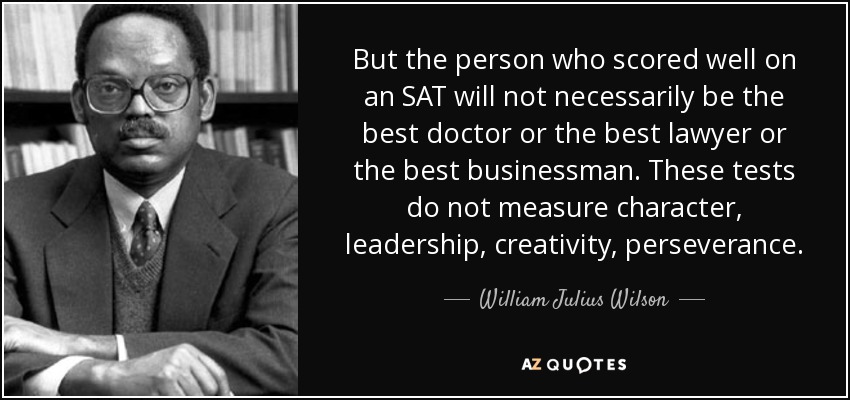
INFOGRAPHIC: Good Lawyer VS. Bad Lawyer – Henderson Work Injury ...TOP 23 QUOTES BY WILLIAM JULIUS WILSON | A-Z Quotes

So how to separate the substance from the fluff?  I believe it all comes down to a person's character.  If a lawyer has solid reviews that are real, a good reputation, is professional, competent and well regarded by other lawyers, clients and courts then you have a good lawyer.  If a lawyer has excelled at cases in the past, strives for continued education and skills, works diligently and is a person who cares then you have a good lawyer. 

It may shock some but there are companies that will sell plaques, awards, certificates that all sound impressive.  A long time ago I learned that word of mouth and referrals from former clients and other lawyers were the best sources of new clients.  That is still the case.  So to avoid a bad lawyer make sure you look into a lawyers background and character.

If you have a family member that is a lawyer/ clerk/ judge/ cop/ bailiff or even knows someone involved with a person involved in the court ask them who is the best lawyer in the area.  If you don't have a connection go to the court and ask the bailiffs who is the best lawyer, they see every lawyer in the area and will likely share that information.  Just watch court for a day and learn firsthand.  Who would you want to represent you?  Look, listen and learn the answer firsthand.  A long time ago I was working as a newer lawyer and I got my first opportunity to be a real trial lawyer because a bailiff told a firm downstate (Concord area) that I was the real deal and they offered me a job based on the court security word of mouth.

What about the slick websites that boast about a lawyer being the top 100 etc?  It is important to know what criteria are used to place a professional in the Top 100.    I routinely get mail/ solicitations from groups trying to sell me plaques, certificates, trophies for a fee I can join some illustrious group. These groups do not vet professionals and are largely scams.  In fact one of my colleagues filled out the form to join on behalf of the lawyer's dog and upon paying the fee the dog was recognized as one of the top 100 lawyers in the state.

I have wondered about a publication called Super Lawyers as some of my colleagues who I respect were named Super Lawyers. I doubted that these respected and honorable member in my legal community would pay for such a title.  So I asked one of them and he told me that it is peer nominated and then vetted, that he didn't pay anything it just showed up.  I still thought this must be for the larger firms down south, due to the larger number of cases and lawyers, but this week I received a notice from Super Lawyers saying that I was selected for 2020.  After a little research it seems that this group really is a peer designation that is given to only 5% of lawyers and does not require a person to pay to join.


Tuesday, May 19, 2020

Frequently Asked Question for Lawyer

I have been a defense lawyer for over 25 years.  It is very common for someone looking for an attorney to ask questions about the process, general information, and legal terms.  I am happy to answer your questions personally so if you have others do not hesitate to contact me.  You can reach me at 603-788-2080.

Envisioning a Civil Court System that Provides Justice for All | IAALSIn the past there have been a number of times that I get asked the same questions.  It seemed to make sense to try to answer the most common questions and put them on the internet.  I also have started a new website that is dedicated to NH Criminal Law.  In that website we have included a section for frequently asked questions (FAQ).
young man in handcuffs being arrested and escorted to police car


Tuesday, April 7, 2020

Constituion in Time of Covid Pandemic?


The Constitution of the United States | National ArchivesAmending the constitution: in NH the people are part of the ...
What about in a time of crisis?  Is there still a right to a speedy trial when there is a pandemic that has closed schools, restaurants, business and where stay at home orders are routine?
The NH State Courts stopped jury trials and criminal cases on March 13, 2020.  What will happen to citizens accused of crimes that are in custody, pending a trial?  The NH Court has issued a blanket statement that all deadlines are stopped during the closure of the courts.
The answer is more complicated than a simple blanket rule that tolls deadlines.  Surely jurors should not be forced to deliberate in a small room for hours even days.  Citizens accused of crime should also not have their liberty taken away without a right to a fair public trial by an imparial jury.
Broad proclamations by courts, while certainly understandable, fail to engage in the individualized speedy trial assessment that the Courts have suggested that the Constitution requires, and that Congress passed legislation to protect.
“‘[A]pplicable statutes of limitations protect against the prosecution’s bringing stale criminal charges against [a] defendant.’”  The starting point for determining whether the statute of limitations bars prosecution is RSA 625:8. The general rule is that the State has six years to prosecute a felony, one year to prosecute a misdemeanor, and three months to prosecute a violation, RSA 625:8, I (a)-(d), but the statute contains numerous exceptions.  
The State generally satisfies the statute of limitations if it files a charge or issues a warrant between the time when the limitations period began, and the time when RSA 625:8 dictates it is supposed to end.  
The Superior Court speedy trial policy incorporates a four-part speedy trial analysis of Barker v. Wingo, 407 U.S. 514 (1972): (1) the length of the delay; (2) the reason for the delay; (3) the defendant’s assertion of his right to a speedy trial; and, (4) the prejudice to the defendant caused by the delay.  
The starting point in the speedy trial analysis is when the defendant is arrested or charged. Humphrey v. Cunningham, 133 N.H. 727, 734 (1990).  The Barker four factors are not equally weighted. The Court places “substantial emphasis” on the last two factors, the defendant’s assertion of his speedy trial rights, and prejudice.  Brooks, 162 N.H. at 582; Locke, 149 N.H. at 8.
Regarding the final factor, the Court places the burden on the defendant to show “actual prejudice” in order to prevail on a speedy trial claim.  This includes “an oppressive pretrial incarceration, anxiety, or an impaired defense.”  Confinement alone is not enough, even if the defendant has never previously been confined.   
“[T]he most serious indication of prejudice” is that “the delay impaired [the] defense,” id., e.g., because essential witnesses or evidence became unavailable over time.  
In addition to a speedy trial, the Sixth Amendment guarantees people the right to participate in their own defense. But coronavirus is resulting in increasingly limited access to visits in prisons and jails, including lawyer visits. When people who are incarcerated cannot meet with their lawyers, it becomes very difficult for them to participate in their own defense. And, of course, the prospect of staying in increasingly dangerous jails could cause people who would otherwise exercise their constitutional right to a trial to plead guilty to get out.

Courts across the country may be able to mitigate, at least in some cases, the problems of delayed trials by allowing people to go home pretrial, releasing pretrial detainees makes sense instead of incarcerating them as they wait out court closures. 

There is no clear answer for how to balance individuals’ constitutional rights against the very real dangers posed by COVID-19 and the courts’ reasonable efforts to prioritize safe public health practices. 

These are difficult issues and there are no simple answers, the problems should not be ignored: nothing less than important rights guaranteed in our national and state consitutions are at stake.